
You have probably heard both sides of the argument. One coach on Instagram swears that SEO is dead and reels are the only thing that matters now. Another consultant insists that ranking on Google is the only reason their calendar stays full. So which one is right?
Here is the honest answer: it depends on your business, not on whoever posted last.
Nearly all consumers now research a business online before they commit to it. In fact, 99 percent of people have used the internet to find information about a local business in the past year, according to BrightLocal’s Local Consumer Review Survey, and that number applies just as much to someone choosing a coach or consultant as it does to someone choosing a plumber. That single stat is why SEO cannot be dismissed outright. But it also does not mean every coaching business needs to obsess over keywords and blog posts starting tomorrow.
In this guide, we will walk through when SEO genuinely moves the needle for coaches and consultants, when it is a waste of time and money, how it stacks up against other marketing channels like referrals and paid ads, and a simple framework to help you decide what is right for your specific business right now. By the end, you will know exactly where you stand, and what to do next.
What SEO Actually Means for a Coach or Consultant

Every search someone types into Google carries an intent behind it. When a person types “executive coach for tech leaders” or “business consultant for small manufacturing companies,” they aren’t casually browsing. They already have a problem, and they’re actively looking for someone who can solve it. That intent is exactly what SEO is built to capture.
Once you understand that, the definition becomes simple. SEO, or search engine optimization, means showing up in those unpaid, organic results when someone searches for the problem you solve. It isn’t paid advertising, and it isn’t a social media post. It’s the section of the results that keeps working long after you hit publish, because it’s built entirely around matching real intent with your content.
For a coach or consultant, this intent shows up in very specific ways. Someone searching “life coach for career change after 40” already knows what they need. They just haven’t found who yet. If your website answers that intent, you get a shot at their attention. If it doesn’t, that search simply ends with a competitor who did the work to be there.
It’s also worth separating this from branded search, meaning when someone already knows your name and searches for it directly. That carries a completely different intent; the person has already decided. SEO, in the context of this article, is about capturing intent before that decision is made, when someone doesn’t know you exist yet.
The Case For SEO: When It Makes Sense

SEO isn’t right for every coach or consultant, but for a specific type of business, it becomes one of the most reliable channels you can build. Here’s when it genuinely makes sense.
You rely on being found by strangers. If most of your clients currently come from referrals or your existing network, you already have a system that works, just not one that scales on its own. SEO becomes valuable the moment you need to be found by people who have never heard of you and never will through word of mouth. It opens the door to a completely new pool of prospects who are actively searching, not waiting for someone to mention your name.
Your niche has clear, specific search demand. SEO only works if people are actually typing something related to your service into Google. Before investing time, do a quick sanity check: type a few phrases your ideal client might search into Google and look at the autocomplete suggestions and the “People also ask” box. If real questions and searches show up around your niche, there’s demand to capture. If the box stays empty, that’s useful information too.
You want a marketing channel that doesn’t require daily content. Social media rewards constant posting. The moment you slow down, visibility drops. SEO behaves differently. A well-written page or article can keep bringing in traffic for months or years with minimal upkeep. For coaches who don’t want to be tied to a daily content treadmill, this is often the biggest appeal.
You’re playing a long game. SEO isn’t a same-week win. It’s a compounding asset, closer to planting a tree than posting an ad. If you have twelve months or more of runway and you’re building a business you plan to run for years, the early investment pays off in a way that keeps growing rather than resetting every day.
You want to build authority before the sales call. When someone finds your content through a search, reads it, and then books a call with you, they arrive already trusting your expertise. You aren’t starting the conversation from zero. Ranking content effectively pre-sells a prospect before you ever say a word, which tends to shorten sales cycles and reduce price objections.
The Case Against SEO: When It Isn’t Worth It Yet

SEO isn’t automatically the right move just because it worked for someone else. There are real situations where it drains time and money without giving anything back, at least not yet. Here’s when to hold off.
You’re brand new with no existing content or authority. SEO rarely shows real traction before six to twelve months, sometimes longer if your niche is competitive. If you just launched and need to pay bills next month, pouring your limited time into blog posts that won’t rank for a while isn’t the right call. This doesn’t mean SEO is off the table forever. It just means it isn’t your first move.
Your ideal clients don’t search; they get referred or headhunted. Some coaching and consulting businesses simply aren’t found through Google. High-ticket executive coaching, niche B2B consulting, and highly specialized advisory work often get sold through relationships, LinkedIn conversations, warm introductions, or speaking engagements. If that describes how your last five clients found you, building an SEO strategy is solving a problem you don’t actually have.
Your niche has almost no search volume. Sometimes the audience is real and the pain point is real, but the language people use to search for it simply isn’t there yet. This happens with very new categories or extremely narrow niches, where the problem exists but people haven’t learned to Google it. In that case, no amount of keyword optimization will manufacture demand that isn’t being searched for.
You don’t have the bandwidth for consistent content. SEO without consistency rarely works. It requires steady publishing over months, not a burst of five articles followed by silence. If you’re a solo coach juggling client sessions, admin, and everything else, and you know realistically you can’t commit to regular content, that time might be better spent elsewhere until you can.
You need revenue in the next 30 to 60 days. This is the most practical reason to skip SEO for now. It’s a long-term channel, not a rescue plan. If your business needs cash flow immediately, paid ads, direct outreach, or activating your existing network will get you there faster. SEO can be layered in once the immediate pressure is off.
SEO vs. Other Channels for Coaches and Consultants
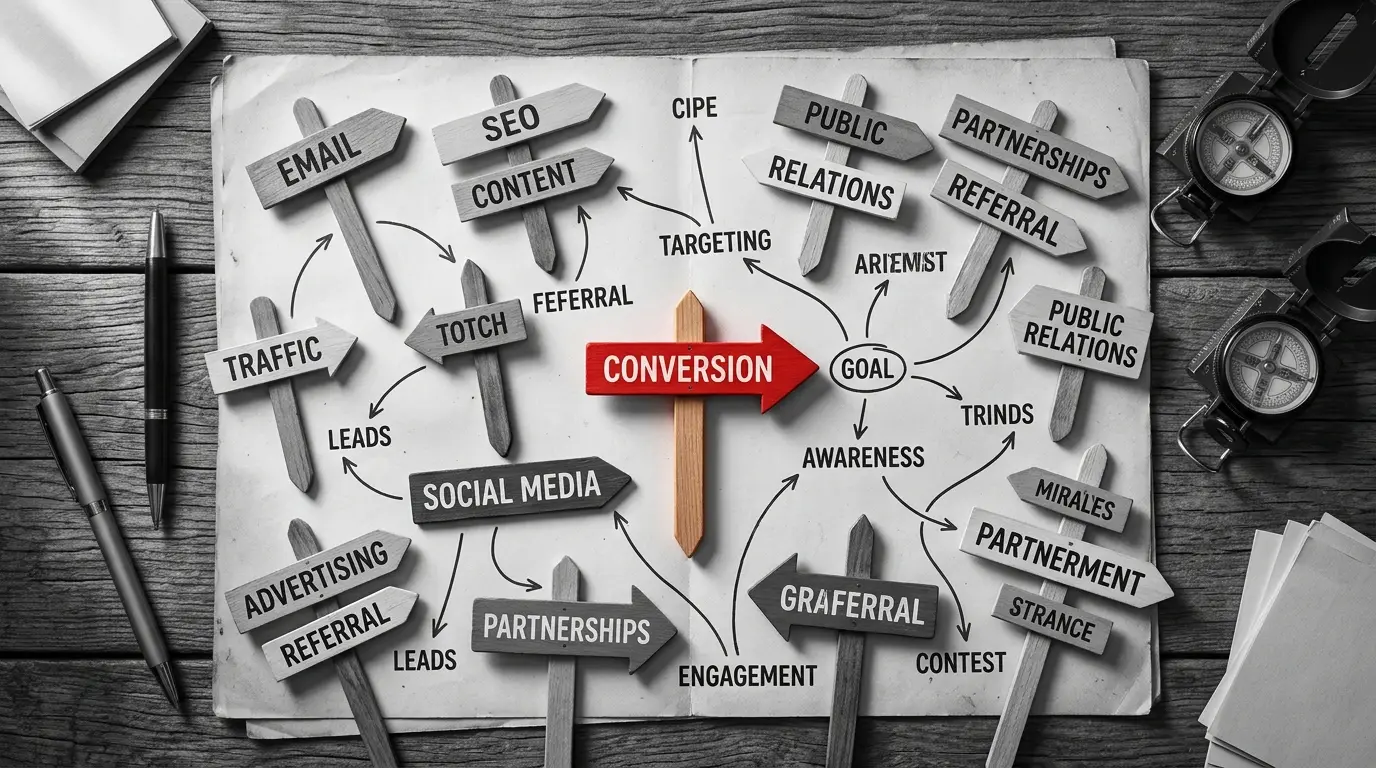
SEO doesn’t exist in a vacuum. It’s one channel among several, and understanding how it compares to the others helps you decide where it fits in your marketing mix rather than treating it as an all-or-nothing choice.
| Channel | Speed | Cost | Longevity | Best For |
|---|---|---|---|---|
| SEO | Slow (6 to 12 months) | Low ongoing cost, high time investment | Compounds over years | Long-term, predictable visibility |
| Paid ads | Fast (same day) | High, ongoing spend required | Stops the moment you stop paying | Immediate leads, testing offers |
| Social media / content | Fast trust-building | Low cost, high time investment | Tied to the algorithm, fades if inconsistent | Personality-driven audience building |
| Referrals / network | Fast, high-converting | Free | Unpredictable, not scalable | Warm, high-trust clients |
| Speaking / partnerships | Inconsistent bursts | Time-intensive | High authority, short-lived spikes | Bulk leads from a single event |
The table makes the tradeoff clear: SEO is slow to start but keeps paying off long after the work is done, while paid ads and referrals move faster but disappear the moment you stop feeding them. None of these channels is meant to work alone. A coach with strong referrals still benefits from SEO catching the strangers who will never get a warm introduction, and a coach doing SEO still benefits from paid ads or speaking to fill the gap while content builds momentum. The real question isn’t which channel wins. It’s which mix fits your stage of business right now.
How to Know If SEO Is Right for Your Coaching or Consulting Business

All the theory so far comes down to one practical question: does SEO make sense for your business specifically? Instead of guessing, run through this quick self-assessment.
Ask yourself the following:
- Do people actually search Google for the problem I solve?
- Do I have six to twelve months of runway before I need major ROI from marketing?
- Am I willing to publish content consistently, even just once or twice a month?
- Do I already have some kind of website or content foundation to build on?
- Is my niche specific enough that I can realistically target and rank for certain keywords?
- Am I trying to reduce my dependence on referrals or a single channel?
Go through each question honestly. If you answered yes to three or more, SEO is worth exploring as part of your marketing mix. That doesn’t mean you need to overhaul your entire strategy overnight, but it does mean the channel fits your situation well enough to start small and build.
If you answered yes to only one or two, that isn’t a failure. It’s useful information. It likely means you need revenue faster than SEO can deliver it, your niche doesn’t have enough search demand yet, or you simply don’t have the bandwidth to commit to it right now. In that case, channels like referrals, paid ads, or partnerships probably deserve your attention first, with SEO revisited once your situation changes.
The goal of this framework isn’t to talk you into SEO. It’s to help you see clearly whether it’s the right tool for where your business actually stands today, not where you hope it will be in a year.
If SEO Makes Sense: Where to Start

Most coaches reading this will hit the same wall: none of this is complicated in theory, but doing it consistently alongside client work is genuinely hard. There are two realistic paths.
Hire an SEO Expert
If your time is better spent with clients than learning a new skill from scratch, hire someone to handle the whole process from the start. Before paying anyone, check a few things:
- Ask for real client results, not just promises. A legitimate SEO professional should be able to show actual ranking or traffic growth from past clients, ideally in a similar industry.
- Be wary of guaranteed rankings. No one can honestly guarantee a #1 spot on Google. Anyone promising that is either inexperienced or not being straight with you.
- Ask how they build backlinks. If the answer involves buying links in bulk or vague “link packages,” walk away. That approach can get a site penalized instead of ranked.
- Check if they explain things in plain language. If every answer is buried in jargon with no clear explanation of what they’re actually doing, that’s a red flag, not expertise.
- Start with a small trial project before committing to a long contract. One core page or a small content batch shows you how they work before you commit real budget.
Do SEO Yourself
If you’d rather keep control and your budget is tight, you can handle this in stages instead of all at once:
- Nail your niche and ideal-client language first. Get specific about who you help and the exact words they’d use to describe their problem. A vague niche produces vague content that ranks for nothing.
- Do light keyword research. Type phrases your ideal client might search into Google and study the autocomplete suggestions and the “People also ask” section. Free tools can give you rough search volume, but even without them, this manual approach tells you what real people are actually typing.
- Build core pages before blog posts. A clear “who I help” page, a services page written around what people are searching for, and a case study or two carry more weight early on than a dozen blog articles nobody finds.
- Start a simple content cadence. One to two well-researched posts a month, each answering a real question your ideal client is searching, is enough to start building momentum.
- Fix the basics that affect rankings. Site speed and mobile-friendliness are direct ranking factors. Make sure your site loads quickly, is fully usable on a phone, and every page has a clear heading structure.
- Get a few quality backlinks. A handful of strong backlinks, from a guest post, a podcast show-notes page, or a relevant directory, do more for your rankings than dozens of low-quality ones.
This doesn’t need to be one big decision made all at once. Many coaches start by doing the foundational work themselves and bring in outside help once they’re ready to commit to consistent, ongoing content.
Common SEO Myths Coaches Believe

Some of the reasons coaches avoid SEO, or do it badly, come down to a few myths that keep getting repeated. Clearing these up now saves wasted effort later.
Myth: You need to post every day to see results. Reality: Consistency matters more than frequency. One to two well-researched posts a month, sustained over several months, will outperform a burst of daily posts that stops after two weeks.
Myth: Cramming more keywords into a page means better rankings. Reality: Google’s algorithms are built to detect and penalize keyword stuffing. Writing naturally for one clear topic per page works better than trying to rank for ten phrases on the same page.
Myth: SEO gives fast results, like ads do. Reality: Paid ads can bring traffic the same day. SEO typically takes months to show meaningful movement, especially for a newer site with little authority built up yet. Anyone expecting overnight rankings will be disappointed, and may quit right before it starts working.
Myth: A good website is all you need, and Google will find you. Reality: A website existing isn’t the same as a website being optimized. Without clear structure, the right keywords on the right pages, and some backlinks pointing to it, a well-designed site can still sit invisible in search results.
Myth: More backlinks are always better. Reality: A handful of relevant, high-quality backlinks do more for rankings than dozens of low-quality ones. Buying links in bulk or grabbing them from unrelated, spammy sites can actually get a site penalized instead of helping it.
Myth: Once you rank, you’re done. Reality: Rankings aren’t permanent. Competitors publish new content, Google updates its algorithm, and pages that once ranked well can slide down if nothing new is added or the competition catches up. SEO is ongoing maintenance, not a one-time project.
Myth: SEO is only for big companies with big budgets. Reality: Local and niche-specific searches often have far less competition than broad ones. A coach targeting a specific audience with the right language on a few core pages can outrank much larger, more generic sites for the searches that actually matter to their business.
A Small Example of What This Looks Like in Practice

Imagine a career coach who works only with mid-career professionals switching into product management. For months, most of her leads come from LinkedIn posts and referrals, and her website barely gets visited.
She starts small. First, she rewrites her homepage and services page around the exact phrases her clients use when searching, things like “how to switch into product management from marketing” instead of vague language like “career transformation coaching.” Then she picks one buyer-intent page, her services page, and rebuilds it clearly around that phrase, adding a short case study of a past client who made that exact switch.
Over the next few months, she publishes one solid blog post a month, each answering a real question she gets asked on discovery calls, like “do I need an MBA to move into product management?” She fixes a few technical issues her site had, including slow load times on mobile, and lets a couple of podcast guest appearances link back to her services page.
Within about four to six months, her services page starts showing up on the first page for a few of those specific search phrases, and she starts getting a handful of inbound leads a month who found her by searching exactly what they needed help with, already warmed up before the first call.
This is what most SEO wins for coaches actually look like. Not viral blog posts or instant top rankings, but one clear page, targeting one clear phrase, slowly climbing until it starts doing quiet, consistent work in the background.
Conclusion
SEO isn’t a project you finish in a month, and it isn’t something every coach needs to chase right away. But once your niche is clear and you’re ready to play the long game, the steps here (nailing your language, fixing the basics, publishing consistently, and earning a few real backlinks) are enough to start building a channel that keeps bringing in leads long after any single post or campaign has faded. Start small, stay consistent, and give it the months it actually needs to work.
Frequently Asked Questions
How long does SEO take to show results for a coaching business? Most coaches start seeing meaningful movement in rankings and traffic somewhere between four and six months, assuming consistent publishing and a clear niche. Highly competitive niches can take longer.
Do I need a blog if I already get clients from referrals? Not necessarily. SEO makes the most sense when you want a channel that keeps working without you actively networking or reaching out. If referrals are covering your pipeline, your time may be better spent elsewhere until that changes.
How many blog posts do I need to publish to rank? There’s no fixed number. One to two well-researched posts a month, sustained for several months, matters far more than a large batch published once and then abandoned.
Can I do SEO without any technical knowledge? Yes, at least the foundational parts. Niche clarity, keyword research, and writing core pages don’t require technical skill. Site speed and structural fixes are where outside help becomes more useful.
How do I know if an SEO freelancer or agency is legitimate? Ask for real client results in a similar industry, be cautious of anyone guaranteeing top rankings, and ask directly how they build backlinks. Vague answers or bulk link packages are a warning sign.
Is SEO better than paid ads for coaches? They serve different purposes. Ads bring faster traffic but stop the moment you stop paying. SEO takes longer to build but keeps working in the background once it’s in place. Many coaches eventually use both.
What’s the biggest mistake coaches make with SEO? Starting with blog content before the foundation is in place. A vague niche, an unclear services page, or a slow site will undercut even well-written blog posts, so fixing those first makes everything after more effective.