

Selling land has never been easier than it is today. Thanks to the rise of online marketplaces, social media, and property portals, landowners no longer need to rely solely on local estate agents or word-of-mouth to find buyers. Whether you own a small residential plot, agricultural land, or a larger commercial parcel, selling land online opens your listing to a much wider pool of potential buyers, often leading to faster sales and better offers.
However, selling land isn’t quite the same as selling a house. Buyers evaluate land differently, focusing on factors like zoning, access, boundaries, and future development potential rather than interior finishes or curb appeal. That means your approach to pricing, marketing, and presenting your listing needs to be tailored specifically to land buyers.
If you’re selling land in the UK, platforms like Rightmove and Zoopla are among the most popular property portals where buyers actively search for land and plots. In the US, sites like LandWatch and Land.com serve the same purpose, connecting sellers with buyers actively searching for land. And in Australia, realestate.com.au and Domain are the go-to property portals for reaching serious land buyers. Whichever region you’re in, listing on the platforms your local buyers already trust and use regularly is a great starting point for reaching serious buyers quickly.
Why Sell Land Online?
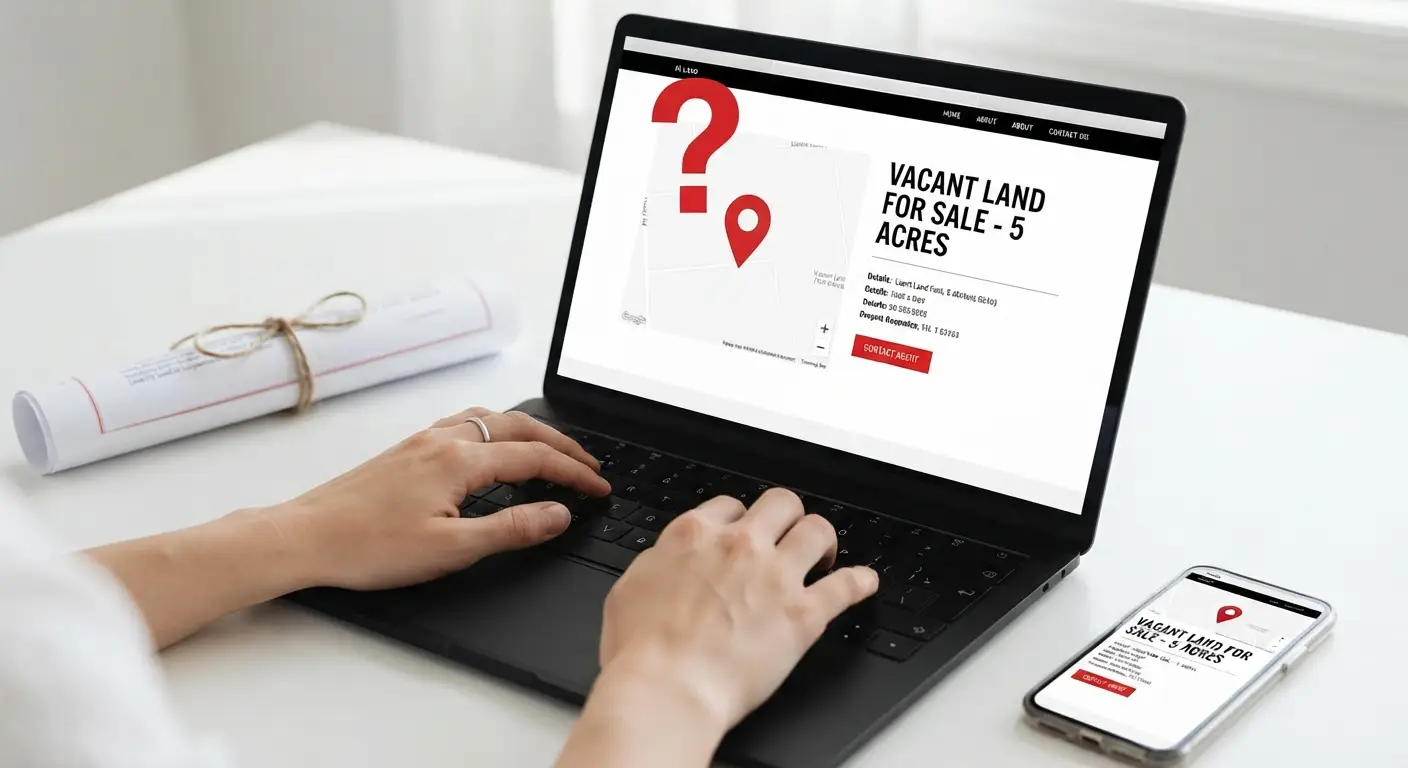
Selling land online offers several advantages over traditional methods like relying on local agents or word-of-mouth:
- Wider Reach: Your listing isn’t limited to local buyers. Online platforms put your land in front of investors, developers, and buyers from across the country (or even internationally), increasing your chances of finding the right buyer faster.
- Faster Sales: With more eyes on your listing, you’re likely to receive inquiries and offers much quicker than waiting for foot traffic or local referrals.
- Cost Savings: Selling online often means lower fees compared to traditional estate agents, since many platforms let you list directly or charge a smaller commission.
- Full Control: You can write your own description, choose your own photos, set your price and manage inquiries on your own schedule without depending entirely on a third party to represent your interests.
- Better Market Insights: Online tools make it easy to research comparable land sales, current market trends, and buyer demand in your area, helping you price and position your land more accurately.
- Convenience: You can list, update, and manage your land sale from anywhere, at any time, without needing to schedule in-person meetings for every step.
Together, these benefits make online selling one of the most efficient ways to turn a piece of land into a sale, especially in a market where buyers increasingly start their search online.
Is Your Land Ready to Sell?
Before listing your land online, it’s important to make sure everything is in order. A little preparation upfront can prevent delays, buyer objections, and complications later in the process. Here’s what to check:
Confirm Ownership and Title Status
Before you even think about listing your land, make sure the title is completely clear and in your name, with no outstanding disputes. Check for any liens, mortgages, unpaid taxes, or claims against the property that could hold up a sale later. If there are easements (rights that allow others to use part of your land, such as a shared driveway or utility access), make sure you understand them and can clearly explain them to potential buyers. Any unresolved boundary disputes with neighbours should also be settled beforehand buyers are far more likely to walk away from a listing that has legal question marks hanging over it than one that’s fully sorted and ready to transfer.
Know Your Zoning and Land Use Restrictions
Zoning determines what your land can legally be used for residential, agricultural, commercial, mixed-use, it’s one of the first things serious buyers will ask about. Contact your local planning or zoning office to confirm the current classification, and check whether there are any restrictions, covenants, or conservation designations attached to the property. If you know of any special permissions, such as planning permission already granted for development, this can be a major selling point, so be ready to highlight it clearly in your listing.
Verify Boundaries and Access
Buyers need to know exactly what they’re purchasing, so confirm your land’s precise boundaries using a recent survey or title plan and don’t rely on old deeds or verbal agreements with neighbours. Equally important is access: check whether the land has direct road frontage, a formal right of way, or an easement allowing entry. Land that’s landlocked or lacks clear legal access is significantly harder to sell and may deter buyers altogether, so this is worth resolving or at least fully disclosing before you list.
Check for Utilities
Find out what utilities are already connected or available nearby, including water, electricity, gas, sewage or septic systems, and internet or broadband access. If utilities aren’t currently on-site, research how far away the nearest connection points are and roughly what it might cost to bring them in, as buyers will often ask this during negotiations. Land with existing utility access typically commands a higher price and attracts more buyer interest than land requiring significant infrastructure investment.
Gather Key Documents
Having your paperwork organised in advance will make the entire selling process faster and smoother. At minimum, prepare your deed, a recent land survey, property tax records, and any zoning or land use permits. If you have additional documents like soil reports, environmental assessments, or utility easement agreements, gathering those too being able to quickly provide requested documents builds buyer confidence and can help move a sale along without unnecessary delays.
Assess the Land’s Condition
Take a walk around your property and consider how it will look to a potential buyer, both in person and in photos. Basic clean-up work clearing overgrown brush, removing debris or old structures, and marking boundary corners can make a noticeable difference in how the listing is perceived. You don’t need to invest heavily in improvements, but presenting the land as well-maintained and easy to access will help it stand out in a crowded online marketplace.
Determine Your Reason and Timeline for Selling
Take a moment to clarify why you’re selling and how quickly you need the sale to close, as this will shape your entire strategy. If you need a fast sale, you may need to price more competitively or consider cash buyers and land-buying companies. If you can afford to wait for the right offer, you have more flexibility to hold out for full market value. Being clear on your timeline from the start will help you set realistic expectations and avoid unnecessary stress during the selling process.
Choose the Right Platform to List Your Land

Where you list your land can significantly impact how quickly it sells and who sees it. Not all platforms are created equal, some are built specifically for land and rural properties, while others are general real estate sites where land listings can easily get lost among houses and apartments. Choosing the right mix of platforms helps you reach buyers who are actually looking for what you’re selling.
Best Websites and Marketplaces for Selling Land
Dedicated land-selling platforms attract buyers who are specifically searching for plots, acreage, or rural property, making them a strong starting point for your listing. Sites like LandWatch, Land.com, Lands of America, and Landmodo are among the most popular marketplaces built specifically for land buyers and sellers. These sites often let you filter and showcase land-specific details like acreage, zoning, and access features general property sites may not highlight as effectively. Listing on a platform built around land buyers, rather than general property seekers, typically leads to more qualified inquiries and a smoother selling process.
Land Selling vs. General Real Estate Sites
General real estate portals like Zillow and Realtor.com have massive traffic and broad visibility, which can still be valuable for reaching a wide audience, including buyers who weren’t necessarily searching for land specifically but become interested once they see it. However, land listings can sometimes get overshadowed by residential properties with more traditional appeal, like houses and apartments, on these broader platforms. A combined approach listing on both a specialised land marketplace and a well-known general property site, often gives you the best of both worlds: targeted buyers and maximum exposure.
Determine Your Land’s Market Value
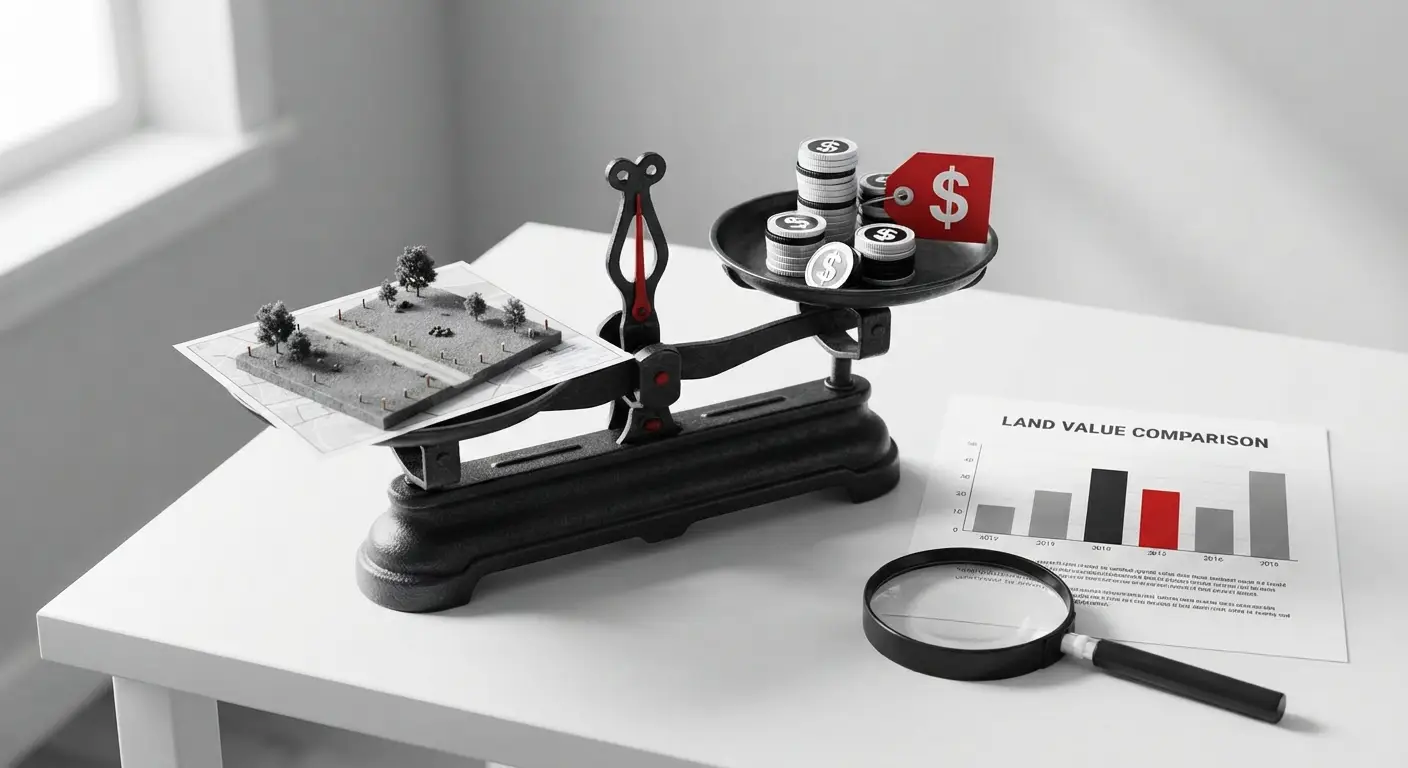
Knowing your land’s true market value is one of the most important steps before listing: price it too high and you’ll struggle to attract interest; price it too low and you’ll leave money on the table. Land values depend on factors like location, size, zoning, access, utilities, and recent sales of similar parcels in your area, so it’s worth taking the time to research this properly before setting your asking price.
How to Research Comparable Land Sales
Look up recent sales of similar land in your area of comparable size, zoning, and location to get a realistic sense of current market pricing. Local property records, county assessor websites, and online land marketplaces often let you filter by location and land type to find these comparables. Pay attention to how long similar listings took to sell and whether they sold at, above, or below the asking price, as this gives you insight into current buyer demand and how much room you may have to negotiate.
Should You Get a Professional Appraisal?
While comparable sales research gives you a good starting estimate, a professional land appraisal provides a more precise and defensible valuation, especially useful for larger, unique, or higher-value parcels. An appraiser will consider factors that are harder to assess on your own, such as soil quality, topography, and future development potential. Though it comes at a cost, a professional appraisal can strengthen your negotiating position and reassure buyers that your asking price is fair and well-justified.
Gather Essential Documents
Having the right paperwork ready before you list your land not only speeds up the selling process but also builds trust with potential buyers. Missing or incomplete documentation is one of the most common reasons land sales stall or fall through, so it’s worth organising everything in advance.
Deed, Survey, and Title Information
Your deed proves legal ownership and should be readily available before listing if you can’t locate it, your local land registry or county records office can usually provide a copy. A recent land survey is equally important, as it confirms the exact boundaries, acreage, and any encroachments or easements affecting the property. Together with clear title information, these documents give buyers confidence that what they see in your listing matches what they’ll actually be purchasing, reducing the risk of disputes after the sale.
Zoning and Land Use Restrictions
Buyers will want written confirmation of your land’s zoning classification and any restrictions tied to it, so gather official documentation from your local planning or zoning authority rather than relying on verbal explanations. This should include details of permitted uses, any conservation or environmental designations, and existing planning permissions if applicable. Providing this upfront not only saves time answering buyer questions but also signals that you’re a transparent, well-prepared seller, which can make your listing more attractive compared to others with less clarity.
Write a Compelling Listing Description
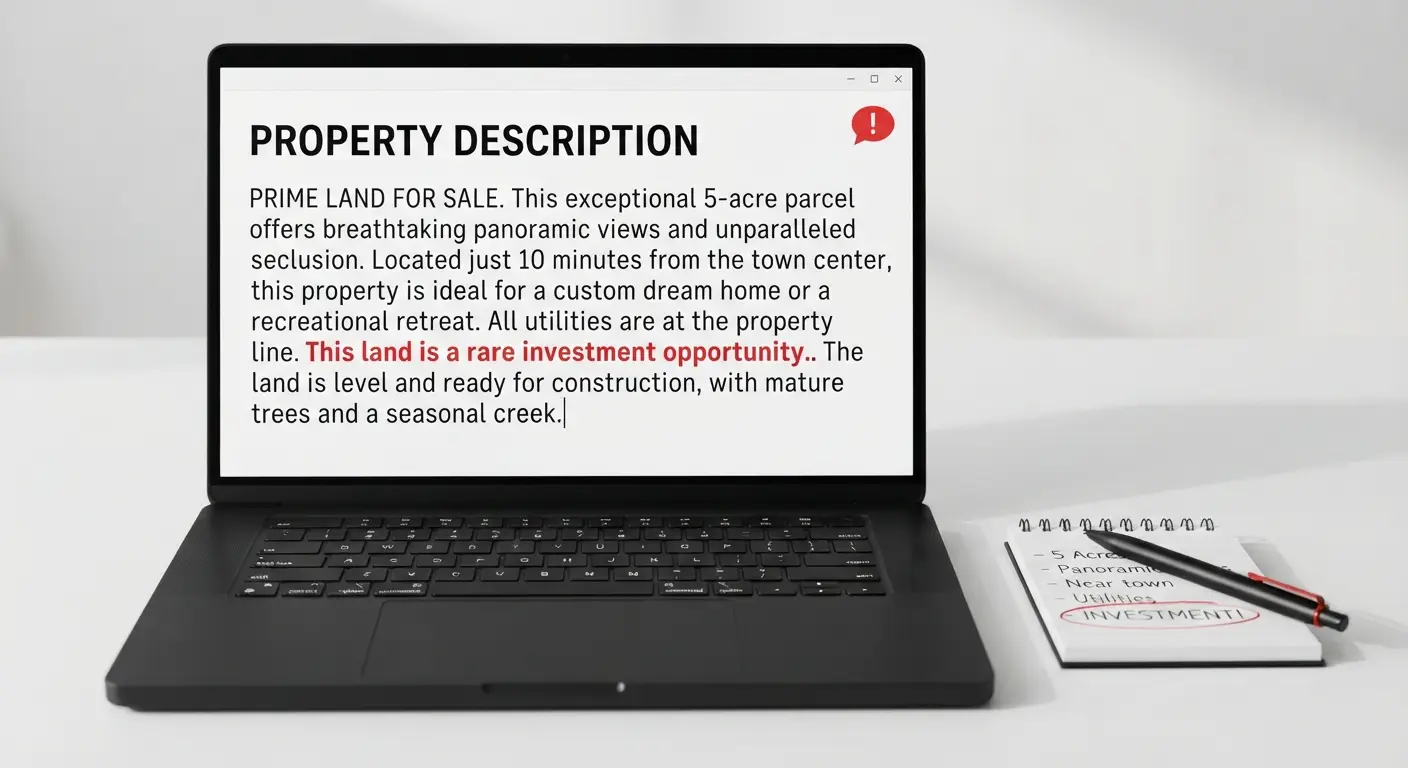
Your listing description is often the deciding factor between a buyer clicking through for more details or scrolling past, and a well-written description doesn’t just list facts, it helps buyers visualise the land’s potential and answers their key questions before they even have to ask. Start with the essentials: exact location, total acreage, zoning classification, and any utilities or access already in place, and highlight standout features such as views, water sources, mature trees, road frontage, or proximity to towns, schools, or major roads, as these details help buyers picture themselves using the land.
Be transparent about any limitations too, like lack of utilities or access restrictions, since honest listings build trust and reduce time wasted on inquiries that won’t lead anywhere. Use clear, descriptive language that paints a picture without exaggerating or making unsupported claims, words like “secluded,” “buildable,” “income-producing,” or “investment-ready” can appeal directly to specific buyer motivations, whether they’re looking for a peaceful retreat, a place to build, or a financial opportunity, and avoid vague filler phrases and instead focus on specific, factual highlights, as buyers respond far better to concrete details than generic sales language.
Take High-Quality Photos and Videos

Since buyers can’t walk the land in person before deciding whether to inquire, strong visuals do the heavy lifting of showing them exactly what they’d be getting. Listings with clear, well-composed photos and videos consistently attract more attention and generate more serious inquiries than those with just a few blurry or poorly lit shots.
Aerial footage gives buyers a sense of scale, layout, and surroundings that ground-level photos simply can’t capture, especially for larger parcels. Drone shots can highlight boundary lines, nearby landmarks, access roads, and the overall shape and topography of the land in a single clear image. If you don’t own a drone, many local photographers now offer affordable drone photography specifically for property and land listings, and the investment often pays off through faster buyer interest.
Alongside photos, a simple annotated map showing the property’s boundaries helps buyers understand exactly what’s included in the sale without confusion. This can be as straightforward as overlaying your survey lines onto a satellite image or using a parcel map from your local land registry or GIS tool. Clear boundary visuals reduce back-and-forth questions from buyers and demonstrate that you’re organised and confident about what you’re offering.
Set the Right Price
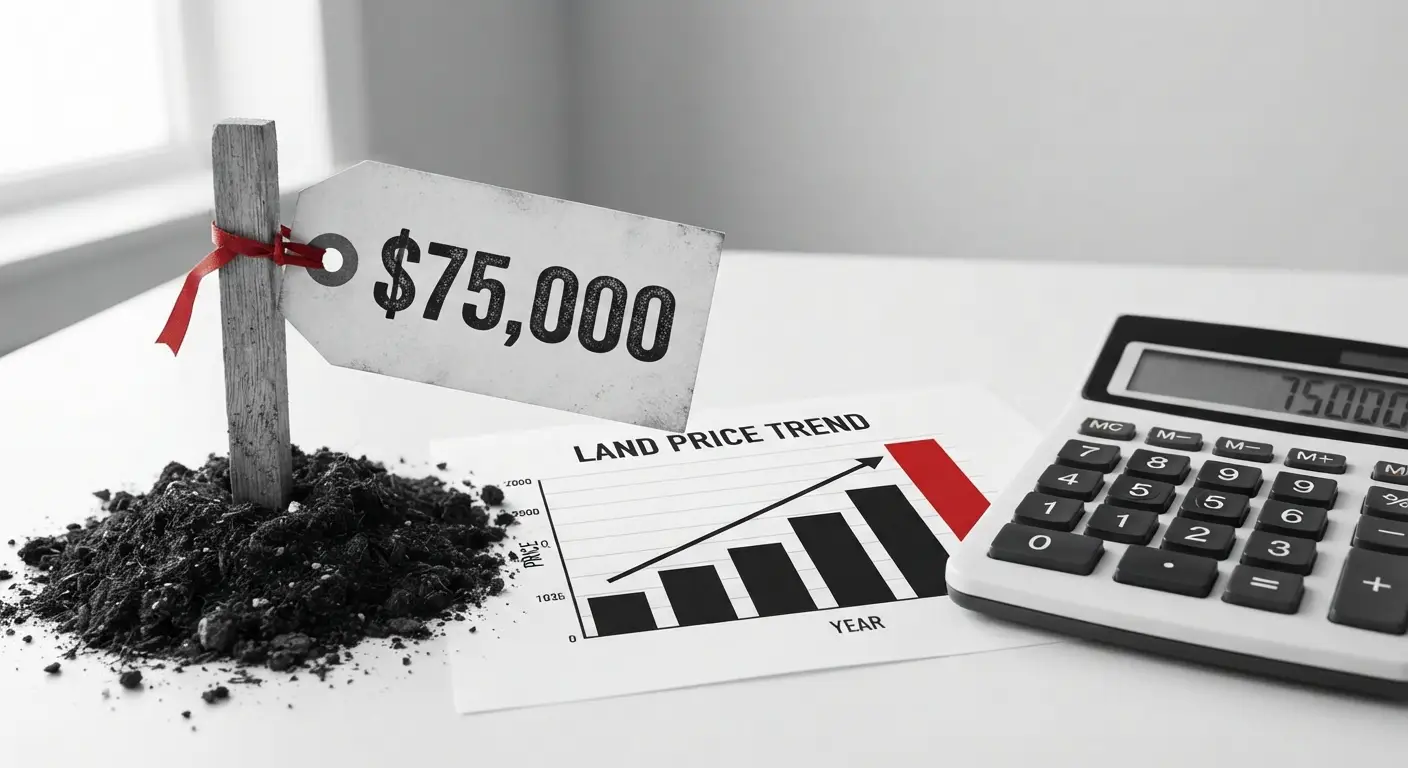
Pricing is one of the most delicate parts of selling land. Get it right, and you’ll attract serious buyers quickly; get it wrong, and your listing could sit untouched for months while buyers assume something’s off. Your price should reflect real market data, not just what you hope to get or what you originally paid.
Base your asking price on the comparable sales research and any professional appraisal you gathered earlier, adjusting for your land’s specific features like access, utilities, and zoning. Consider pricing slightly competitively if you want faster interest, or setting a firmer price if you’re willing to wait for the right buyer. It also helps to break down your price per acre when comparing to similar listings, since this is often how land buyers evaluate value at a glance, especially when comparing multiple properties side by side.
Many land buyers expect some room for negotiation, so pricing slightly above your minimum acceptable amount can give you flexibility during offers without leaving money on the table. That said, avoid setting a price so inflated that it discourages serious buyers from even reaching out in the first place. Being clear with yourself beforehand about your absolute lowest acceptable price will help you negotiate confidently and avoid making rushed decisions under pressure.
Market Your Land Listing

Simply posting your listing online isn’t always enough, actively promoting it helps you reach more of the right buyers, faster. A combination of organic and paid marketing efforts can significantly increase visibility and bring in more qualified inquiries.
Social Media and SEO Tips
Share your listing across relevant social media platforms and local community groups, especially those focused on real estate, land investment, or the specific region where your property is located. Use clear keyword-rich titles and descriptions in your listing including terms like your location, land type, and size to help it appear in search results when buyers are actively looking. Posting high-quality photos or short video clips alongside your listing link tends to generate more engagement and shares than text alone extending your reach organically.
Paid Ads vs. Organic Reach
Organic promotion through social media, community groups, and search-optimised listings costs nothing but can take time to gain traction, especially for a niche market like land. Paid advertising whether through social media ads, search engine ads or boosted listings on land marketplaces can accelerate visibility and put your listing directly in front of targeted buyers based on location and interests. A balanced approach using organic efforts for ongoing visibility and paid ads for an initial push, often delivers the best results without requiring a large marketing budget.
Handle Inquiries and Negotiate Offers
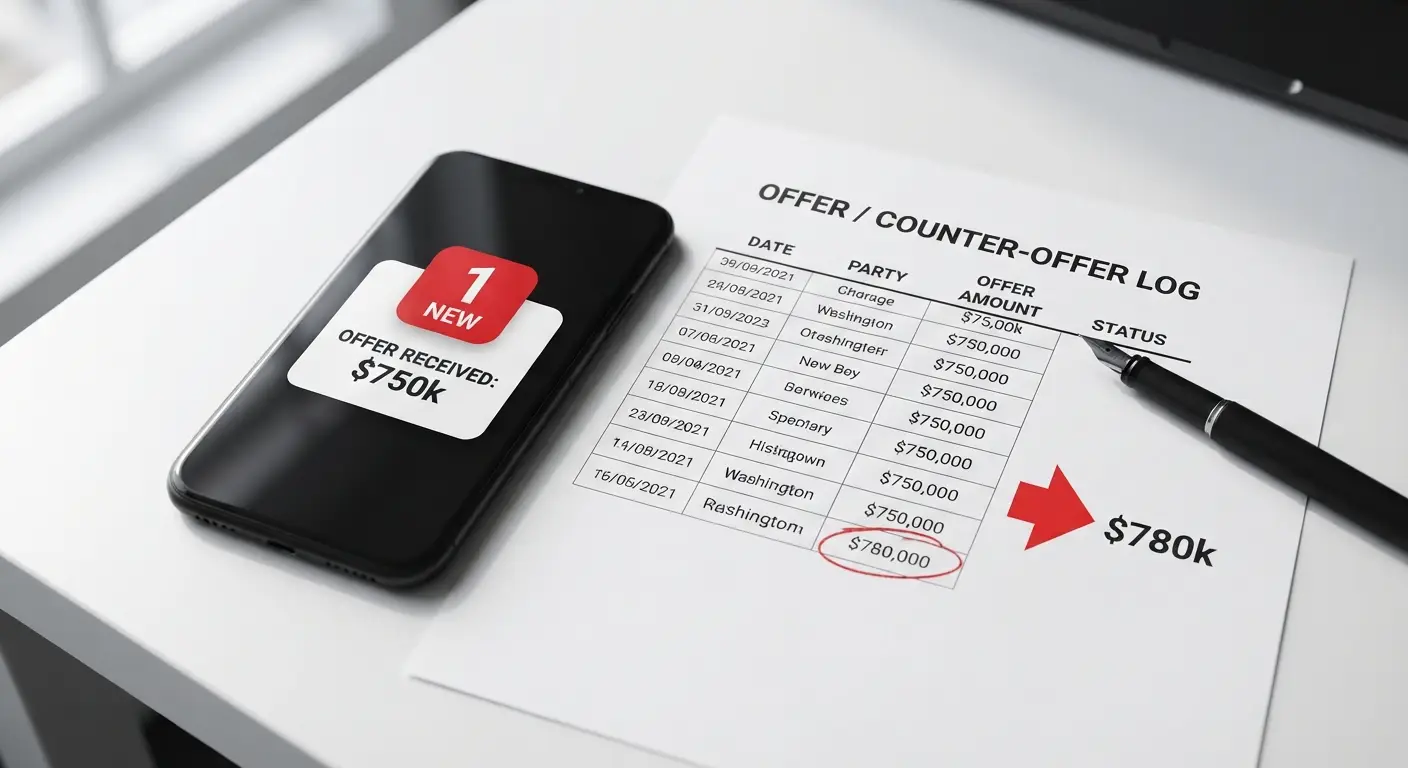
Once your listing starts generating interest, how you respond can make the difference between a smooth sale and a lost opportunity. Buyers often reach out to multiple sellers at once so a prompt and professional response helps you stand out and keeps serious buyers engaged.
Qualifying Serious Buyers
- Ask a few quick questions early on to gauge how serious a buyer is their intended use for the land, their timeline and whether they’re pre-approved for financing if needed.
- Be responsive and professional with every inquiry but don’t feel obligated to spend excessive time on buyers who seem unclear about their intentions or budget.
- Keep a simple log of who’s inquired, what they asked and how serious they seem. Especially if you’re fielding multiple offers at once.
Negotiation Tips for Land Sellers
- Go into negotiations with a clear idea of your minimum acceptable price but stay open to reasonable offers within your range.
- If a buyer offers less than you’re hoping for, consider countering with a price slightly above your minimum rather than rejecting outright.
- Be patient but not passive if an offer feels too low or a buyer seems unresponsive. It’s fine to follow up once and then move on to other inquiries rather than letting one negotiation stall your entire sale.
Close the Sale
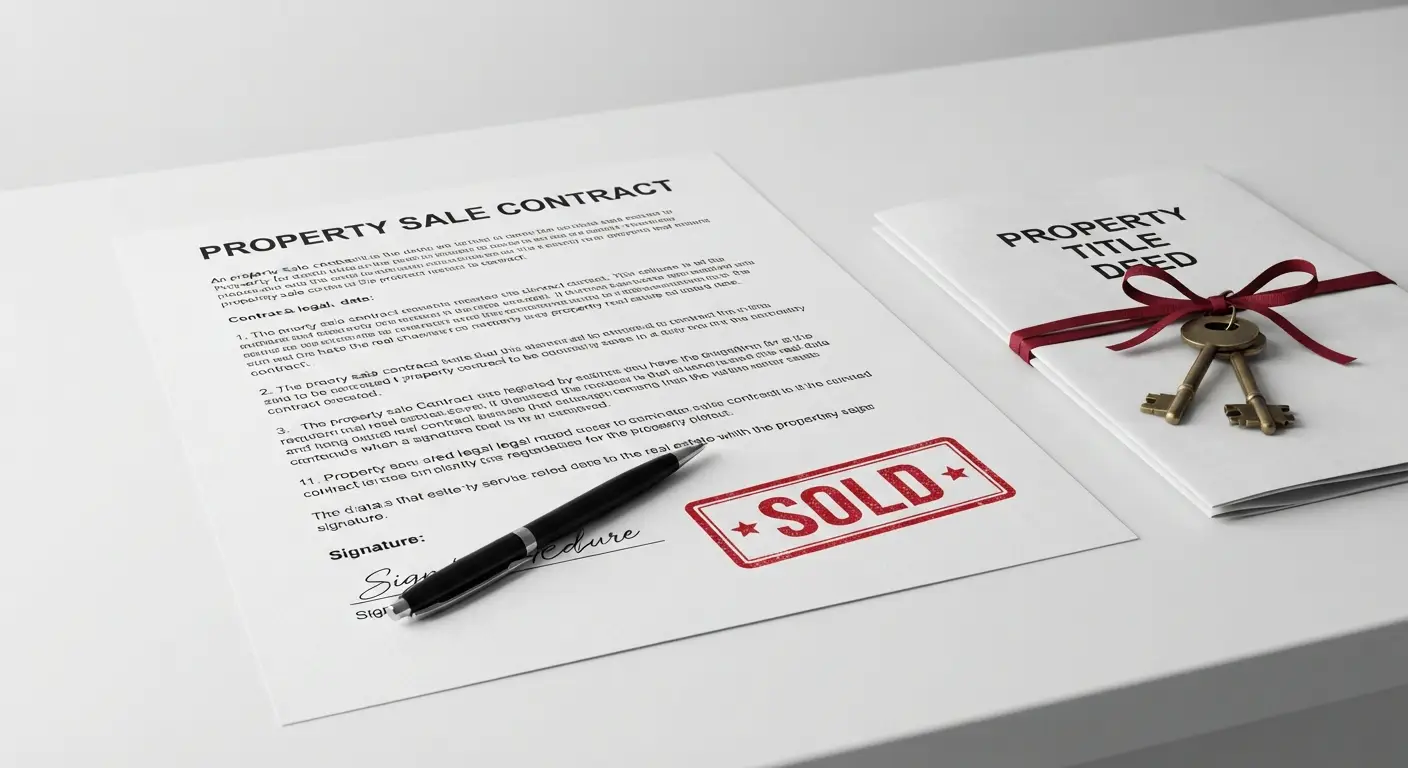
Once you’ve agreed on a price with a buyer, there are still a few important steps to finalise before the sale is complete. Handling this stage carefully ensures the transaction goes smoothly and protects both you and the buyer.
Paperwork You’ll Need: A signed purchase agreement or contract outlining the agreed price, terms and any contingencies is the starting point for closing. You’ll also need your deed ready to be transferred to the new owner along with updated title and survey documents if they weren’t already provided earlier. Depending on your location you may also be required to provide disclosures covering things like zoning restrictions or environmental factors.
Escrow and Financing Options: Working with an escrow service or title company helps ensure funds and documents are exchanged securely, protecting both buyer and seller throughout the transaction. If the buyer is financing the purchase, confirm their loan approval status early on to avoid last-minute delays. Some sellers choose to offer seller financing (owner financing), which can attract more buyers but comes with its own risks and requires clear legal terms to protect both parties. Once funds are confirmed and paperwork is signed, the title is officially transferred and the sale is complete.
Common Mistakes to Avoid When Selling Land Online
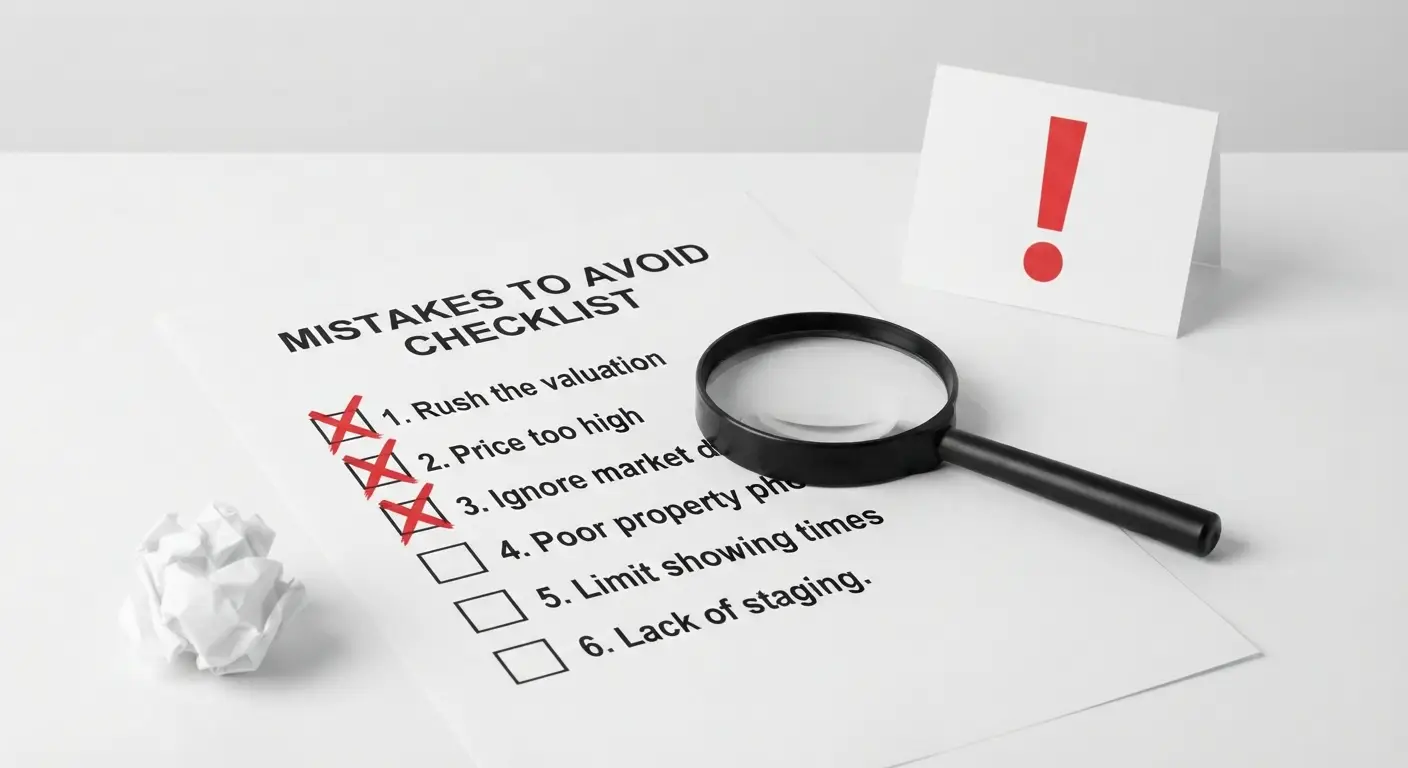
Even with a solid strategy in place, it’s easy to make small missteps that slow down your sale or turn away potential buyers. Being aware of these common mistakes ahead of time can help you avoid unnecessary setbacks.
Overpricing the Land
One of the most frequent mistakes sellers make is pricing based on emotional attachment or what they originally paid rather than current market data. Overpriced listings tend to sit unsold for long periods and buyers may assume there’s something wrong with the property simply because it’s been listed for so long without selling.
Using Poor-Quality Photos
Blurry, poorly lit, or outdated photos can make even great land look unappealing, causing buyers to scroll past without a second thought. Since buyers can’t walk the property before inquiring and weak visuals are often the biggest reason a listing fails to generate interest.
Leaving Out Key Details
Vague listings that skip important information like zoning, access, or utility availability tend to generate more time-wasting inquiries rather than serious offers. Buyers want to know exactly what they’re getting upfront and missing details often lead to buyers assuming the worst and moving on to a different listing.
Ignoring Legal and Title Issues
Failing to resolve title disputes, unclear boundaries or missing documentation before listing can cause deals to collapse late in the process, after time and effort have already been invested. Sorting out these issues early prevents unpleasant surprises for both you and the buyer during closing.
Listing on Too Few Platforms
Relying on just one website or marketplace limits your exposure and can significantly slow down your sale. Using a combination of dedicated land marketplaces and general real estate sites helps ensure your listing reaches the widest possible pool of serious buyers.
Being Unresponsive to Inquiries
Slow or inconsistent responses to buyer questions can cause interested parties to lose interest or move on to other listings entirely. Prompt, clear communication throughout the process helps keep buyers engaged and shows that you’re a serious and reliable seller.
Conclusion
Selling land online doesn’t have to be complicated. By taking the time to prepare your property, research its true market value and gather the right documentation upfront, you set yourself up for a smoother, faster sale from the very start. Choosing the right platforms, writing a compelling description and using strong visuals like drone photos and boundary maps all work together to help your listing stand out in a crowded marketplace.
Pricing fairly, marketing actively and responding promptly to inquiries can make all the difference between a listing that sits untouched and one that attracts serious and qualified buyers. And when it comes time to close, having your paperwork organised and working with a trusted escrow or title service ensures the final steps go smoothly for both you and the buyer.
Whether you’re selling a small residential plot or a larger parcel of rural land, the online marketplace has made it more accessible than ever to connect with the right buyer, no matter where they’re searching from. With the right preparation and strategy you can turn your land into a successful sale with confidence.
Frequently Asked Questions
How long does it take to sell land online?
The timeline varies widely depending on location, price, and demand but land typically takes longer to sell than residential property often anywhere from a few months to over a year. Pricing competitively and marketing across multiple platforms can help speed up the process.
Do I need a real estate agent to sell land online?
No, many sellers successfully sell land directly without an agent, especially when using dedicated land marketplaces that simplify the listing process. However, an agent experienced in land sales can be helpful for complex transactions, unique zoning situations or if you prefer hands-off support.
How much does it cost to list land online?
Costs vary by platform; some marketplaces offer free basic listings, while others charge a flat fee or a percentage-based commission upon sale. It’s worth comparing a few platforms to see which pricing structure fits your budget and selling timeline.
Can I sell land without a survey?
While it’s technically possible in some cases having a recent survey is strongly recommended, as it gives buyers confidence in the exact boundaries and acreage they’re purchasing. Selling without one can lead to disputes or delays, especially if the buyer requests one before closing.
What if my land doesn’t have utilities?
Land without utilities can still sell, but it’s important to be upfront about this in your listing, along with information about the nearest connection points if available. Some buyers specifically look for raw, undeveloped land, so this isn’t necessarily a dealbreaker.
Is seller financing a good option for selling land?
Seller financing can attract more buyers particularly those who may not qualify for traditional loans, and can sometimes lead to a faster sale. That said, it comes with added risk and requires clear legal agreements so consulting a real estate attorney before offering this option is recommended.